Which Door to Use on Tram and Bus
Buses and trams do not always open the same leaf for boarding and leaving. Mark the working door on the pavement, wait for people to exit, and stay clear of the opening once you are on or off.
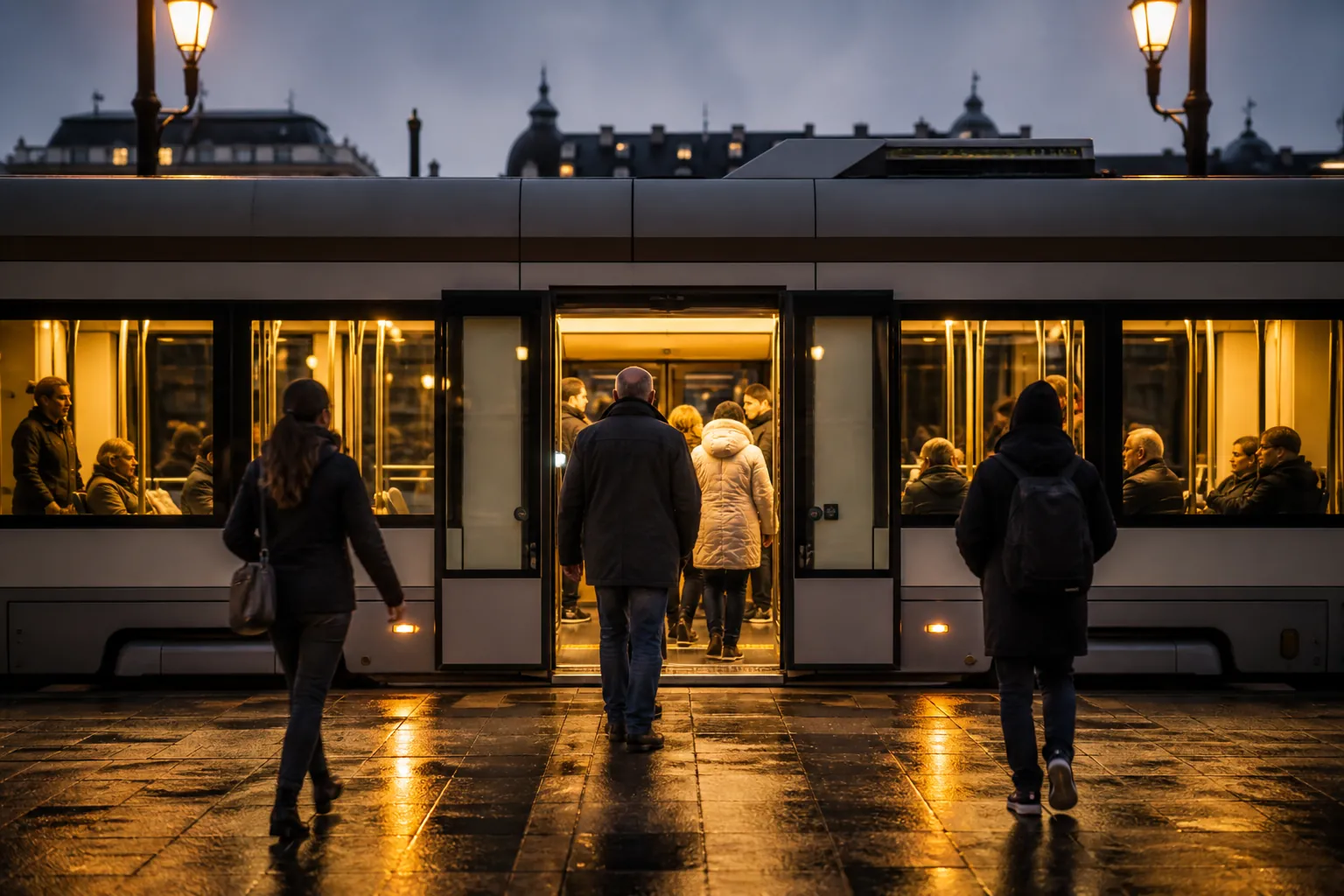
The wrong door is one of the fastest ways to turn a first ride into a blocked step. Buses, trams, and light rail do not always open the same leaf for boarding and leaving. Locals move without thinking. Visitors who stand in the opening while deciding hold up an entire car.
This guide is for travellers who can already find the stop and now need to know which leaf to use. It does not replace the signs on the vehicle. It explains how to mark the working door before the chime, not after your foot is already on the step.
Why door habits differ by mode
A bus may board at the front and leave at the middle. A tram may open every door and expect fare to be ready before you step up. A metro gate may sit far from the platform, so the car doors themselves are only for boarding and leaving, not for paying. Light rail often looks like a tram and behaves like a train. Assuming all city vehicles work like a coach at home is how cases end up in the leaf.
Short stops make the rule stricter. If the car only opens for a few seconds, standing in the doorway while you rummage for a pass is treated as blocking traffic. Pay before the step. Decide the door before the car arrives. Move clear once you are on or off.
Mark the working door while you are still on the pavement. The aisle is a poor place to learn the rule for the first time.
What to watch before the car arrives
- Look for painted arrows, door icons, or text that marks boarding versus leaving.
- Watch which leaf locals queue toward, and which they leave free for people exiting.
- Note whether a front door is for the driver check only, or for all boarding.
- Keep bags and cases off the step until those leaving have cleared the opening.
A boarding and leaving sequence
- At the stop, stand clear of the leaf until the doors open and exiting passengers step down.
- Board through the door marked for entry, or through the one regular riders are using that day.
- Move into the aisle far enough that the sensors can close; do not linger in the square of floor by the door.
- One stop before you leave, shift toward the working exit without blocking people who leave earlier.
- Step off, walk a few paces clear of the opening, then pause to orient. Turning around in the leaf delays everyone behind you.
If a door stays locked during a short halt, do not pry it. Walk inside the car to the next open leaf. Forcing a sealed door is how bags catch and how the car leaves late.
Standing space and courtesy at the leaf
People waiting to leave stand close to the door. People waiting to board stay off the step until the aisle clears. Mixing those two groups in the same square of floor is the usual source of friction. Keep your case between your feet, hold a rail with one hand, and face the opening only when your stop is next.
When the rule changes that week
Temporary works can lock a center door or force all boarding to the front. The sequence you wrote yesterday may already be wrong. Read the notice on the stop pole and watch the first car before you commit. If you need a door briefing for the lines you will use, send the outline of your days through the contact page. We prepare written sequences. We do not operate vehicles.