Watching Your Stop When Announcements Fail
When the speaker clips every station name, the next-stop board and a simple count matter more than a phone alarm. Learn to watch the stop yourself before the doors close on your chance to leave.
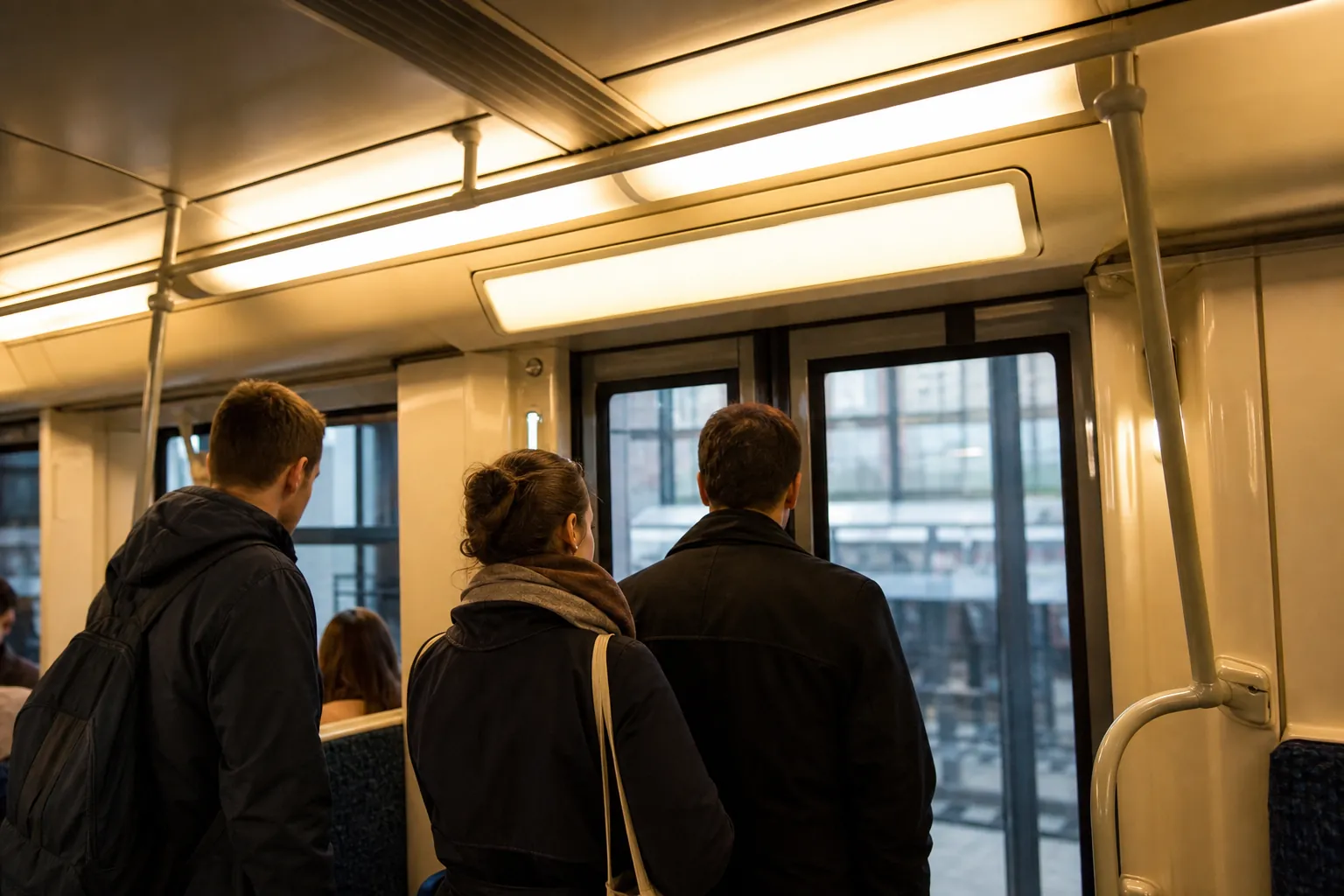
Station names on a speaker are often clipped, translated poorly, or skipped entirely. Waiting for a voice you can recognise is how a first ride ends two halls past the market you meant to visit. The reliable method is slower to learn and faster in practice: watch the stop yourself.
This piece is for travellers whose first boarding will happen on a bus, tram, or metro where the announcement system is uneven. It assumes you can already buy or tap fare before the doors. It focuses on leaving where you intended without turning the aisle into a rehearsal stage.
What fails when you trust only the voice
A muffled speaker may swallow half of every name. A recorded voice may use a form of the name that does not match the board above the door. In a packed car you may not hear the chime that marks the next stop at all. None of that is rare. Treating the announcement as the only signal is what turns a short ride into a long walk back.
A phone alarm is not a substitute. The alarm rings after the doors have already closed, or while you are still seated three rows from the leaf. By the time you stand, the car has moved. Count, watch, and stand early. The alarm can remind you to look up. It cannot open a closed door.
If the speaker is unclear, ignore it. The next-stop board, the count of stations, and your place by the door are the working tools.
Build a stop-watching habit before you board
Choose a first ride with four to six stops on a quieter hour. Write the sequence of station names in the order you will pass them. Mark the one where you leave. That list is your backup when the board goes dark.
- Stand where you can see the next-stop display and still reach a rail.
- Keep luggage between your feet so you can move when your stop is next.
- Face the working door one stop early, not after the car has already slowed.
- If you miss the stop, ride to the next station and return. Do not force a turn in the aisle.
A simple counting method
Counting works when names are hard to read. Start at zero when the doors close on your boarding stop. Each time the car stops and the doors open, add one. When the count matches the place you marked, leave. Pair the count with the board whenever the board is lit. The two checks catch each other’s mistakes.
- Board and take a standing place that can see the door and the next-stop board.
- Confirm the first departing stop on the board against your written list.
- At each halt, update your count and glance at the board before the doors close again.
- One stop before yours, shift closer to the leaf without blocking people who are leaving earlier.
- When your stop arrives, step off, move clear of the doors, and only then check the street name.
If the board and your count disagree, trust the more conservative choice: leave at the earlier stop rather than risking a long walk back from two stations later. You can always ride forward again once you are oriented.
Doors, bags, and other people
Stop-watching fails when you cannot reach the door. Sitting deep in a crowded car with a case in the aisle is a plan to miss the halt. Stand near the working leaf when your stop is close. Keep the bag against your shins. Let people exit before you step toward the opening.
When the board is dark
Some cars lose the display for a stretch of tunnel or after a power flicker. Fall back to the count and to landmarks you can see through the window if the line runs above ground. Do not shout station names across the car. A quiet question at the door, asked once, is enough. Then return to your own count.
Conditions change between visits. A renamed stop, a temporary skip, or a board under repair can undo yesterday’s notes. Confirm again on site. If you want a first-ride sequence that includes stop-watching for the line you will use, send the outline of your days through the contact page. We write briefings. We do not ride the car for you.