Planning Your First Transfer Without Rushing
A transfer that looks short on a map can take longer than the ride that got you there. Plan one change you can finish while standing still, with fare ready and enough space to read the signs.
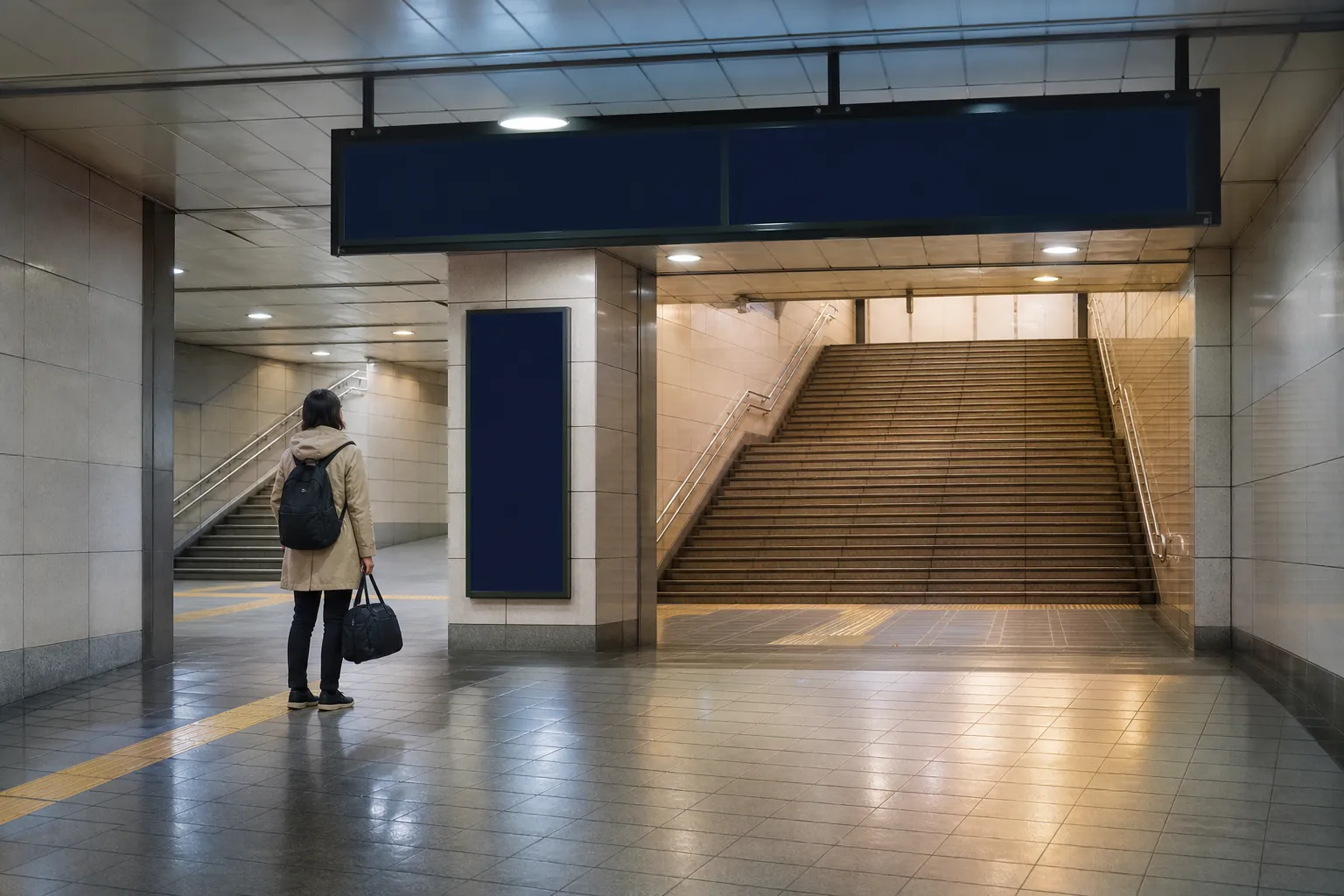
A diagram can make a transfer look like one short walk. On the ground it is often a second journey: stairs that reverse direction, a second fare check, a platform on the far side of the hall, and a crowd that does not move at the pace you planned. The first transfer of a trip should be treated as a learning stop, not as a sprint between two rides.
This guide is for travellers who already know how to board one vehicle and now need to change lines without arriving breathless at a closed door. It does not sell tickets and it does not replace the notices posted in the station. It explains how to choose a first change you can complete while still reading the signs.
Why the diagram understates the walk
Line maps flatten height and time. Two platforms that share a station name may still be separated by a long corridor, a set of stairs, and a gate that only opens in one direction. The ride that got you there may have taken four minutes. The walk to the next car may take eight, especially if you are carrying a case or travelling with a child.
Peak hours stretch that gap further. People pause under the first overhead board they recognise. Bags catch on railings. A short escalator becomes a queue. If your plan depends on catching the next departure the moment you step off, you are planning against the building, not with it.
Plan the transfer as if the walk will take longer than the ride. If that still feels workable, keep it. If it does not, drop the change and stay on one mode for the first outing.
Choose one change, not a chain
On a first day, one transfer is enough. Two or three stacked connections leave no room for a missed door, a locked leaf, or a board that points the other way. A single change lets you learn the corridor once and still have time to stand still while you read.
Prefer a transfer that stays on the same level when you can. Stairs and escalators multiply mistakes when you are also watching luggage and a child. If the only option includes a climb, build in a pause at the top before you join the next platform line.
- Keep the first transfer to one change between two modes you have already seen from the street.
- Avoid timed connections that assume you will run the last twenty steps.
- Leave a buffer before any appointment that depends on the second vehicle.
- If a stroller is involved, favour a same-platform or low-step change over a multi-level hall.
A calm sequence for the first change
Write the transfer as a list of actions, not as a hope that the signs will be obvious. The goal is to arrive at the next door with fare ready and without blocking anyone behind you.
- Before you leave the first car, confirm the station name on the board and stand near the working door early.
- Step clear of the leaf, move a few paces into the hall, and stop. Do not walk while reading the first large sign.
- Find the line or mode name you need, then the platform letter or number, then the direction of travel.
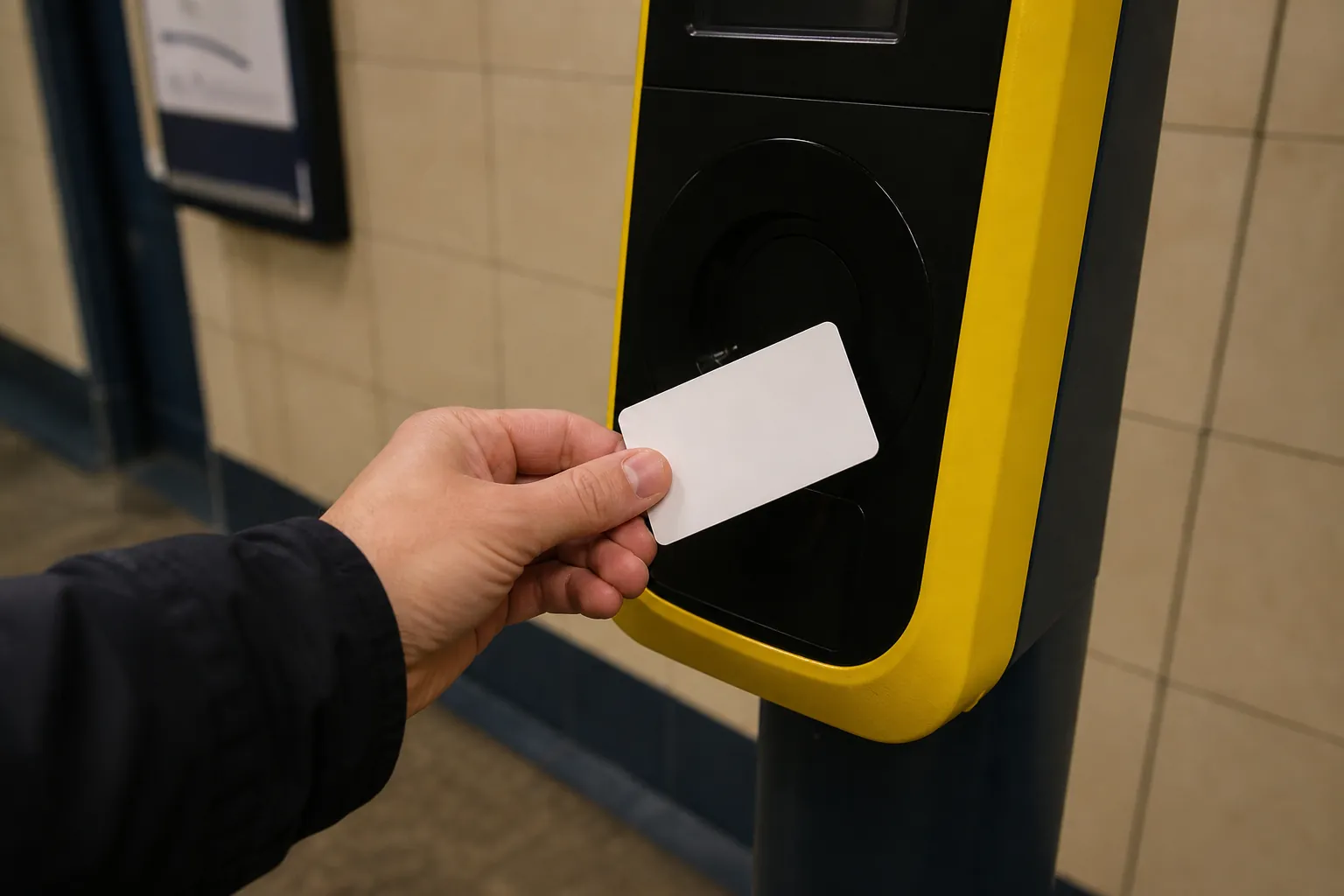
- Check whether a second fare tap or gate sits between you and the next car. Complete that before you join a queue.
- Walk to the platform, stand where you can see both the next-stop board and the door, and wait for the car without hovering in the leaf.
If any step feels unclear, ride to the next station on the same line and return later. Turning around in a crowded transfer hall costs more time than one extra stop.
What to carry in your head, not in your hands
Keep both hands free enough to hold a rail or a child’s hand. A phone map that needs constant zooming will slow you in the exact place where people need to pass. A paper note with the line name, platform label, and the word for “exit” or “transfer” on the local signs is often faster.
Do not rely on a voice assistant in a loud hall. Speakers and crowd noise swallow short phrases. Look up, match the characters on the board, and move only when the match is clear. If the board and the painted floor arrows disagree, follow the board that names your line, then reassess at the next junction.
When plans shift after you arrive
Works close a corridor. A temporary gate sends everyone up a different stair. The transfer you briefed in the morning may not exist in the afternoon. Treat the written sequence as a starting order, then re-read the notices on the wall. If the change has become a maze, skip it and take a longer ride on one mode. A late lunch is cheaper than a bag caught in a door.
If you want a transfer sequence written for the corridors you will actually use, send the outline of your days through the contact page. We prepare briefings. We do not operate vehicles or sell passes.