desmognath
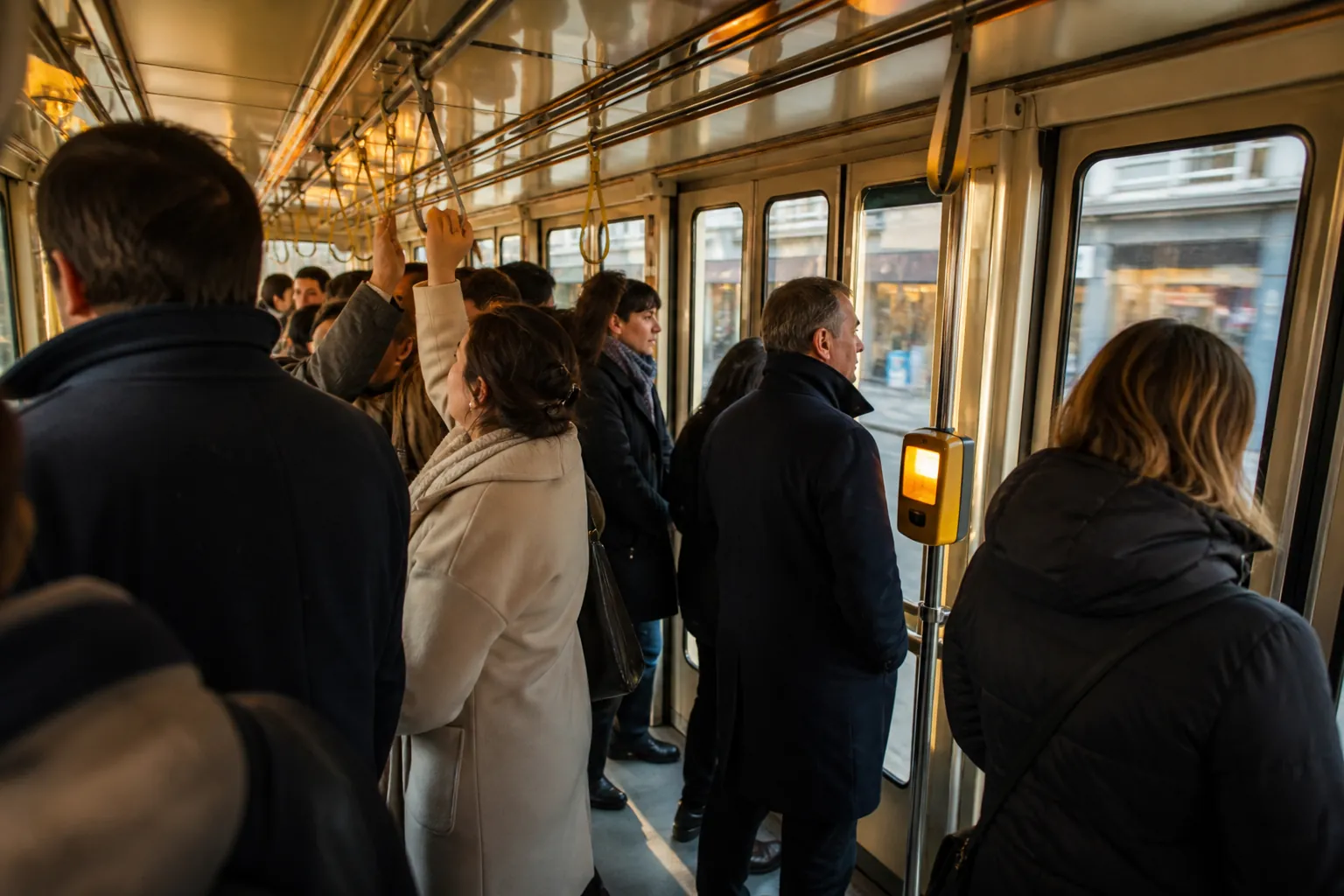
Crowded tram aisle in morning light, standing passengers gripping overhead rails, a yellow validator glowing beside the center doors, shopfronts sliding past the windows, mixed warm lamp light and cool daylight, 1920x1080

Bus, tram, and metro briefings

desmognath — City Transit: How to Board Where the Rules Are Never Announced, and Get Off Where You Need To

The hard part is not the map. It is the order of actions that regular riders treat as obvious and never say out loud.

We treat the vehicle as its own stretch of the trip: fare before the doors, the working entrance, where to stand with a bag, how to change lines without sprinting, and how to watch a stop when the speaker is muffled. The ride can be tight, loud, and abrupt. We describe that plainly, then walk through a sequence you can use on a first boarding.

On the vehicle

The window is part of the visit

A booked car shows the corridor you asked for. A walk shows the pavement under your own pace. A bus or tram keeps the city in motion while you share the floor with people who are not on holiday: shift changes, school bags, market crates, the quiet of a late car. That mix is why we put transit in the plan instead of treating it as leftover time between rooms.

Each mode uses the same city and still asks for a different body of habits. A bus may board at the front and leave at the middle. A tram may open every door and expect you to have already paid. A metro may check tickets at a gate far from the platform. Light rail often looks like a tram and behaves like a train. We compare those differences on the same day, because a traveller rarely uses only one of them.

None of this is a promise of a faster crossing. Doors close on a timer. Announcements skip a name. The diagram above the door may not match the curve you see through the glass. If the car is full, you will stand, and the air may be too cold or not moving at all. The value is not comfort. The value is knowing the order of actions before you are in that aisle for the first time.

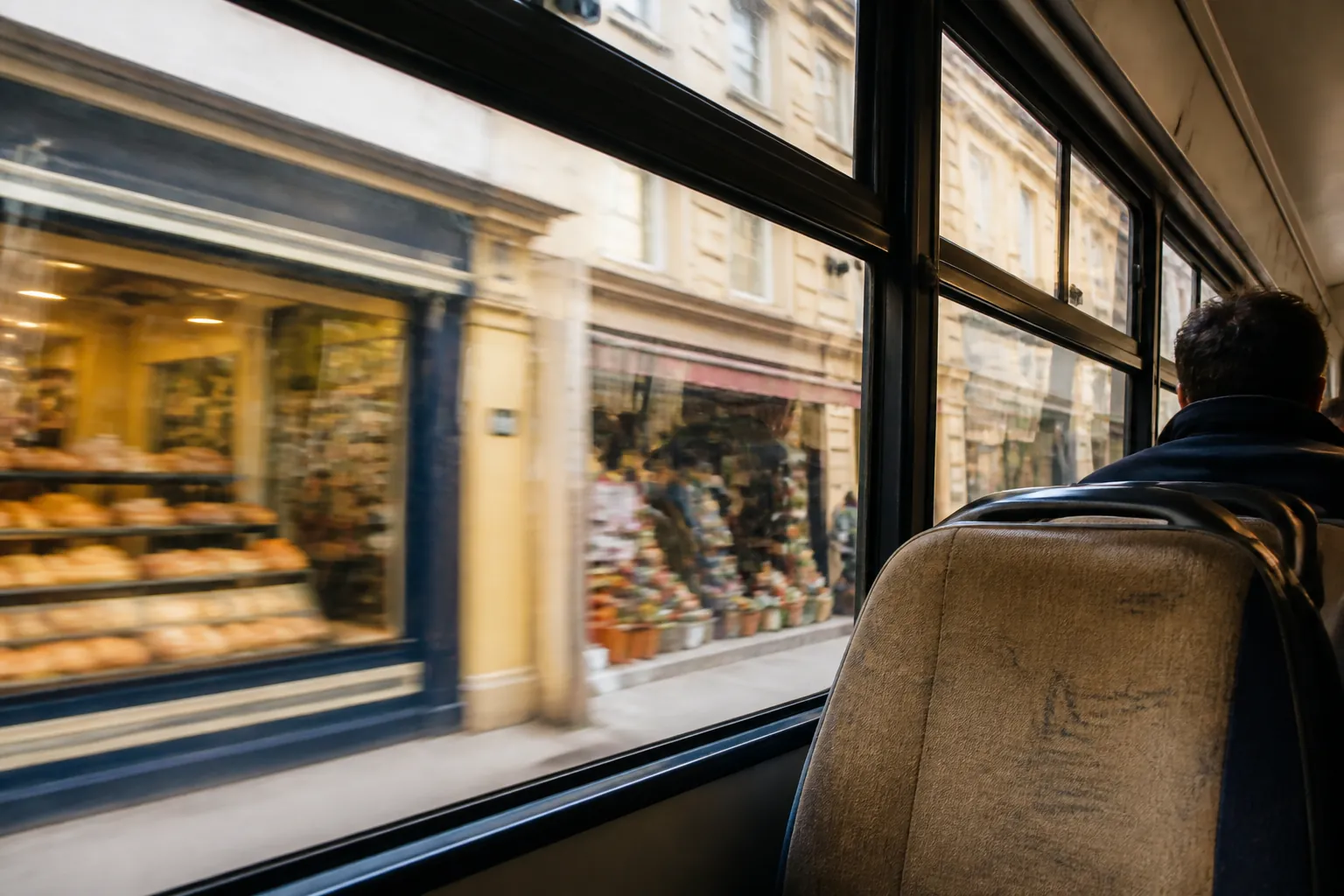
View from a city bus seat through large side windows, blurred bakery and hardware shopfronts sliding by, a worn fabric seat in the foreground, daylight reflecting on scratched glass, 1600x1000

Unspoken order

Three habits locals do not explain

Regular riders learned this sequence as children. They do not announce it because it feels too small to mention. For a visitor, missing one step is how a first ride turns into a blocked door or a missed stop.

Pay, then board

Most systems want proof of fare before your foot hits the step: a tap on a pole, a paper slip from a machine, a pass shown at a gate. Inspectors rarely wait for you to rummage after the doors have shut. We write down where that check happens for the line you will actually use, including what to do if the machine on the platform is out of paper.

Enter and leave on purpose

One door may be for boarding, another for leaving, and a third may stay locked during a short stop. People waiting to get off stand close to the leaf; people waiting to get on stay off the step until the aisle clears. Lingering in that square of floor is the fastest way to annoy a full car. We mark the working doors before you ride, not after the chime.

Bag, seat, and aisle

Priority seats are not a suggestion. A bag on a cushion during a crowded run is treated as a person who refused to stand. Hold the rail with one hand and keep the case between your feet or against your shins. Sit only when the car is open enough that standing is a choice, not a blockage. That is courtesy and it is also how you stay ready to move at your stop.

Field notes

Counts from rides we actually took

These figures are working totals from our own notebooks, not targets. They come from repeated trips on bus, tram, metro, and light rail, from briefings we have prepared for travellers, and from the first-boarding walkthrough we still use ourselves. They will grow slowly. They will not jump to impress anyone.

14

Years of ride notes

Each of us still writes after the car empties: which door worked, how long the transfer actually took, and where the fare check sat that week.

86

First-ride briefings

Personal walkthroughs prepared for travellers who wanted the transit stretch of a trip written as a sequence, not as a map screenshot.

4

Modes on one day

Bus, tram, metro, and light rail compared on the same city day, because a visitor is asked to switch between them without a rehearsal.

9

Steps before boarding

The checklist we walk through before a first ride: fare, door, standing place, stop-watching, and the transfer you should not rush.

First boarding

A short line, watched by you

Transfers, peak hours, and muffled announcements all become easier after one uneventful ride. The aim of a first trip is not covering ground. It is leaving at the stop you chose.

  1. Pick a line you can count

    Start with a stretch of four to six stops on a mode you have already seen from the street. A packed metro at change of shift is a poor classroom. An off-peak tram with a clear next-stop board is a better one. We help you choose the vehicle that matches how ready you are that day, not the one that looks most impressive on a diagram.

  2. Watch the stop yourself

    Names on the speaker may be clipped, translated poorly, or skipped. A phone alarm will not open a door that has already chimed. Stand before your stop, face the working leaf, and keep a count if the board is dark. If you miss it, ride to the next station and return. Turning in the aisle is slower than one extra stop.

  3. Change lines without a sprint

    A transfer can take longer than the ride that got you there: stairs, a second fare check, a platform on the far side of the hall. On a first day we plan one change at most, with time to read the signs while standing still. Rushing a connection you have never walked is how bags catch in doors.

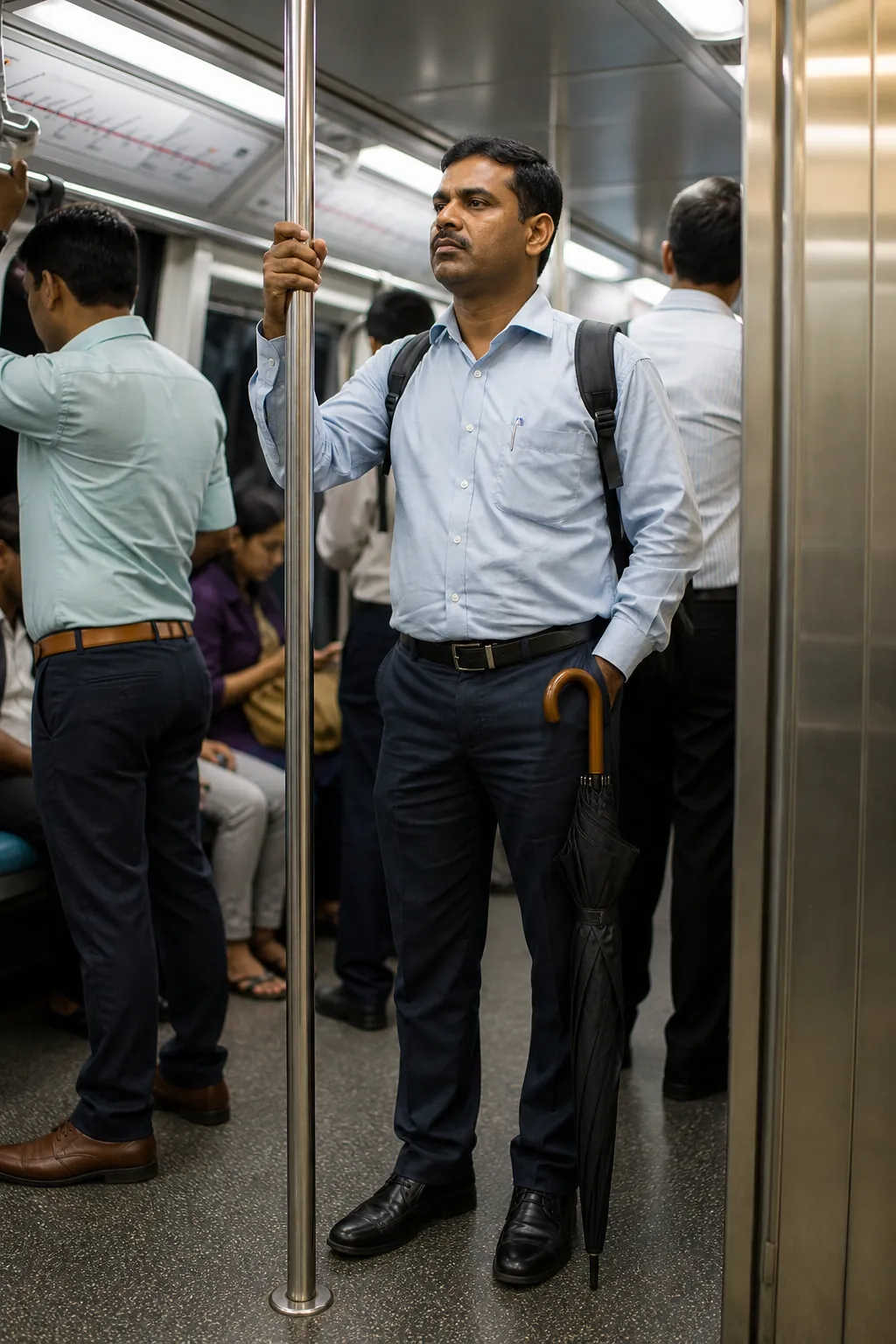
Standing passengers in a metro car holding a vertical stainless rail, a folded umbrella tucked against one shin, overhead route map slightly out of focus, cool fluorescent light on brushed metal, 1600x2000

The desk and the car

Three people who still ride the line

We do not publish from a desk alone. Each briefing starts with a ride the author took, then a check against notes shared with the Harborline Travel Study Group and the Midland Mobility Workshop.

Elena Vasquez, 400x400

Elena Vasquez

Field Observation Lead

Passenger Practice Certificate, Northbridge Transit Workshop

Elena rides the same corridor at different hours and writes the order people actually follow: who moves first at the door, where a bag is tolerated, and when the car stops being a place to learn.

Marcus Hale, 400x400

Marcus Hale

Ticketing and Boarding Advisor

Route Briefing Credential, Harborline Travel Study Group

Marcus maps fare media, validators, and the door that is in use that week. His briefings start before the platform and end only after the passenger has proof of fare in hand.

Priya Nandakumar, 400x400

Priya Nandakumar

First-Ride Preparation Specialist

Orientation Certificate, Midland Mobility Workshop

Priya prepares travellers for a first boarding: a short line, a standing place that can reach a rail, and a way to watch the stop when the voice on the speaker is unclear.

From riders we briefed

What the first week on the car felt like

These notes come from people who asked us to walk through the transit stretch of a trip. They describe specific snags, not a polished result.

I arrived with two cases and stood in the front doorway because that is how coaches work at home. The driver would not move until I stepped back. Marcus had already written that this line boards at the middle and that a case belongs between the feet, not in the leaf. After that one correction I could ride without blocking anyone.
I missed three stops in two days because I waited for a name I could recognise. The speaker swallowed half of every station. Elena’s note was blunt: count the stops, stand early, ignore the voice if it is unclear. The next morning I got off where the market actually is, not two halls later.
We were travelling with a child and a folded stroller. I had planned a tight transfer because the diagram made it look like one staircase. Priya made us drop that connection and take a longer tram that stayed on the same platform. We were late to lunch and nobody was stuck in a door. That was the point.

Ask us to walk the transit stretch with you

If you want a first-ride sequence written for the lines you will actually use, send the outline of your days. We prepare a briefing. We do not operate vehicles, sell passes, or run a live map.

Request a Consultation

What we keep repeating

City transit is a set of habits, not a shortcut. We write those habits down so a visitor can board without guessing, stand without blocking, and leave at the stop they chose.

Reading notes and limits

desmognath provides knowledge about city buses, trams, metro lines, and light rail as part of trip preparation. The pages describe sequences we have observed and briefings we offer as consultations. They are written so you can understand how a vehicle is used, not so the site can stand in for local staff, operators, or a person standing beside you on the platform.

Schedules, door rules, fare checks, and platform layouts change between visits. A validator that worked last season may be moved. A door that opened on every car may lock during a short stop. Confirm details again with the operator and with notices on site before you ride. Do not treat a page on this site as a live instruction for the hour you step on.

Decisions about routes, timing, luggage, and whether to ride at all remain yours. If a plan depends on a tight connection, on travelling with a child, or on carrying more than you can hold while standing, sit with that risk before you leave. We can help you write a calmer sequence. We cannot take the ride for you.

This is a travel resource. It does not offer medical advice. Questions about comfort, motion, fatigue, or physical strain belong with qualified specialists, not with a page about boarding order. We do not claim that riding a bus, tram, or metro improves health, mood, or fitness.